
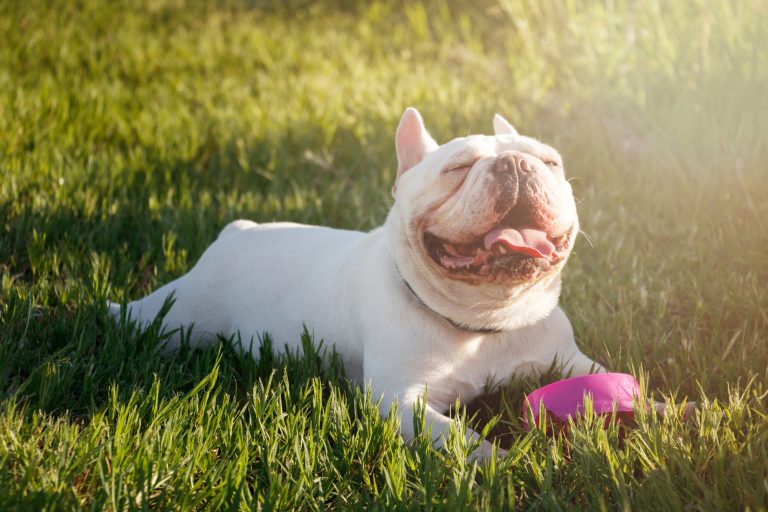
Your dog is fine all winter. Then spring hits and suddenly there is paw chewing. Belly scratching. Face rubbing on the carpet. Red, irritated skin that seems to come out of nowhere.
You already know it is the grass. You watched it happen. Your dog rolled around in the yard for ten minutes and came inside gnawing at his own feet. Every spring, same thing. Every fall, it calms down. You have probably tried Benadryl, maybe even a round of steroids from the vet, and you are wondering if this is just going to be your dog's life every warm season.
It does not have to be.
I have been down the dog allergy rabbit hole myself. My own dog Axel sent me there, scratching so bad he stopped sleeping, stopped eating, scabs all over. I wrote a whole post about it if you want the full saga. What I learned in that process changed how I think about allergies entirely, in dogs and in people.
Here is what I want you to understand about grass allergies specifically, because they have their own pattern.
Why Your Dog Reacts to Grass
Your dog's immune system is not broken. It is overreacting.
Grass pollen, grass oils, even just the physical contact with grass blades — none of these are actual threats. Your dog's body knows that on some level. But something in the system is treating them as dangerous, and the result is inflammation, itching, redness, and misery.
This is important because it changes where you aim your solution. You are not trying to eliminate grass from your dog's life. You are not trying to shut down the immune system with drugs. You are trying to help your dog's system stop overreacting to something that is not actually hurting it.
That is exactly what frequency-based flower essences are designed to support — the energetic pattern underneath the physical reaction.
How to Tell It Is Grass (and Not Something Else)
Dog allergies can look maddeningly similar no matter what is causing them. But grass allergies have a few tells:
Seasonal pattern. This is the biggest one. If your dog is fine from November through February and miserable from April through September, you are looking at something environmental and seasonal. Food allergies and sensitivities are year-round. They do not take the winter off.
Paw chewing and licking. Especially after being outside. Your dog walks on grass with bare feet. If the paws are the first place symptoms show up, grass contact is a likely culprit.
Belly redness. Dogs that lie on grass or roll in it will show contact irritation on the belly, where the fur is thinnest and skin meets grass directly.
Face rubbing. Rubbing the face on carpet, furniture, your leg — anywhere they can get friction on that itchy skin around the muzzle and eyes.
Ear infections that cycle with seasons. Chronic ear infections in dogs are often allergy-related. If they flare up in spring and clear up in winter, the connection is seasonal.
What it is NOT: Food allergies show up year-round and often involve digestive symptoms alongside the skin issues. Flea allergies have a different pattern. You will usually see hot spots concentrated at the base of the tail and hind legs, and you will find fleas or flea dirt if you look. Grass allergies are more diffuse. Paws, belly, face, ears.
If your dog checks the seasonal boxes, you are probably dealing with grass or pollen reactivity. Now let us talk about what to do.
The Flower Essence Approach
Here is where my path diverges from the standard vet route.
Steroids work. I am not going to pretend they do not. They suppress the immune response and the itching stops. But they also suppress the immune system broadly, they come with side effects, and the allergies come right back when you stop. You are managing symptoms on repeat every spring, and your dog's body never actually learns to handle grass differently.
Frequency-based flower essences work from the other direction. Instead of suppressing the reaction, they support the body's own ability to recalibrate. The essence addresses the energetic pattern of overreactivity, helping the system's discernment so it stops sounding the alarm over things that are not threats.
We have two products that work for this:
Allergies and Food Sensitivities — This is in our pet department. It supports the body in calming overreactive patterns to environmental and food triggers.
Allergy Defense Bioessence — This is in our people section, but people and animals can use either interchangeably. Same frequency-based approach, same safety profile.
Both are safe for dogs of all sizes. No sedation, no side effects, no drug interactions.
How to give it to your dog:
- 4 drops in the water bowl (refresh daily)
- 4 drops on a treat
- 4 drops directly in the mouth
- Topically on paw pads or ears for localized issues
Some people do all of the above. You cannot overdo flower essences, they are frequency-based, not chemical, so there is no toxicity concern.
What to Expect
I want to be honest with you here because I have seen the full range of responses.
Some dogs respond fast. Within a day or two, the scratching decreases, the redness starts to fade, and your dog actually sleeps through the night. This is not unusual, I have seen it happen repeatedly.
Some dogs need time. If your dog has had allergies for years, the pattern is deeply established. Give it 30 days minimum before deciding whether it is working. Consistency matters. Multiple doses every day, it’s easier to underdo than overdo.
You might see an initial uptick. This is sometimes called a healing response. Things can temporarily get a little worse before they get better as the body processes and recalibrates. If your dog scratches a bit more for the first few days, that is not a sign it is not working. It is a sign something is shifting and you might back down on the times you dose in a day until things settle.
How to know it is working:
- Less scratching, especially at night
- Paw pads returning to normal color
- Less tearing or eye discharge
- Ear infections not returning on their usual schedule
- Your dog actually relaxing and sleeping well
- Hair growing back in bald spots
This is not either/or with vet care. If your dog is in acute distress, see your vet. Flower essences work alongside conventional treatment, not instead of it. They may help you reduce the frequency and severity over time, and some people find they can eventually skip the steroid cycle altogether. But start where your dog needs you to start.
What Other Pet Parents Are Saying
I could tell you all day that this works, but what matters more is what people who have actually used it with their dogs are experiencing. These are real reviews from real customers.
Tarrah W. had a Frenchie who broke out in itchy bumps every spring and fall for years. She had searched high and low for a non-toxic solution. After starting Allergies and Food Sensitivities, her dog's skin was healing within a day or two, and the frantic scratching stopped.Ruth P. in Florida noticed her dog had less tearing and the pads of his paws were no longer red after using the essence. Her words: she would definitely recommend it.Erica in Wisconsin had tried many different things over many years for her dog's itchiness. Nothing worked as well as this. She finally saw real relief in her dog's itching, scratching, and paw chewing.
Ginger M. in Virginia Beach put her elder pit bull Amos on the essence for two months. His hair actually started growing back where he had lost it, and the constant itching and scratching stopped. Her words: "It really works."
Dorothy in Pennsylvania had a foster Pekingese with a terrible case — double eye and ear infections, a resistant bacterial skin infection, three years of vet visits and chemicals with no lasting improvement. She combined our Allergies essence with Parasite Assassin and saw a complete turnaround. No more outbreaks for three months, hair growing back, and the dog finally sleeping peacefully through the night.
Charla P. in North Carolina had a dog with severe allergy problems and had not been able to find anything to help after trying many different products. She tried the allergy drops and was very impressed.Not every dog responds identically. Jane in Colorado tried it for her dog Sunny and it did not work for him. Allergies are individual. Something that does not work for one dog could work beautifully for another. I thought it didn’t work for my boy, but found out he needed more frequent doses. But the pattern we see most often is improvement, and the reviews above are representative of what we hear.
Your dog cannot tell you their sinuses feel better. But their body responds to the same frequencies yours does.
Getting Started
If your dog's grass allergies are seasonal and you want to try a frequency-based approach:
- Start before the season hits. One customer who started a couple weeks before pollen season noted a dramatic difference compared to previous years. If you are reading this in late winter, now is the time.
- Pick your product. Allergies and Food Sensitivities is formulated for pets. Allergy Defense Bioessence is in the people section but works identically for animals. Either one is a solid choice. If you think food sensitivities are also in play, get that one regardless of whether you are a people or a pet. 😉
- Be consistent. 4 drops multiple times a day in water or on food. Every day through allergy season.
- Give it time. Most people see shifts within the first couple weeks. Deep patterns may take longer.
Your dog does not have to dread spring. And you do not have to dread watching them suffer through it.
These statements have not been evaluated by the Food and Drug Administration. These products are not intended to diagnose, treat, cure, or prevent any disease. Flower essences are frequency-based support tools and are not a substitute for veterinary care. Always consult your veterinarian about your pet's health concerns.
Combating Dog Anxiety: 10 Tips for Managing Fireworks and Thunderstorm Phobia
If you have a dog that gets scared during fireworks and thunderstorms,

Parasite Bioessence for Pets
With the new Parasite Assassin blend, you can use it for either people

A Holistic Approach to Dog Allergies
The last couple of months I have disappeared down the rabbit hole